Thinkwell’s capabilities draw on the same information, context, and objectives, so you can move between research, communications, and evaluation without losing your place.
01
Research
Start every decision from the evidence.
Investigate questions using public records, research materials, and the information your organization brings to Thinkwell.
Legislative tracking
Follow bills, amendments, committee activity, and votes across relevant jurisdictions. Connect changes in legislation to the issues and objectives your team is already tracking, so important developments can be examined in context.
Regulatory research
Follow federal rules and their comment deadlines, with a notice when a comment period is a week from closing, and research agency records and other official sources. Bring relevant findings into ongoing projects without separating the interpretation of a development from the source material behind it.Court decisions are not built in yet.
Research synthesis
Bring together reports, notes, historical records, and external references. Identify connections between sources, examine competing explanations, and produce research materials that preserve traceability.
Automated references
Find relevant evidence across connected sources and previously completed work. Keep references available as a project develops, allowing people to revisit the basis of an argument or decision.
News relevance scores
Each news story carries a policy relevance score with the reason for it, and shows which of your team’s work it bears on, so you can see why a story deserves attention.
Multimedia referencesComing soon
Draw on images, recordings, and video alongside documents. Each reference points to the page, frame, or moment it comes from, so anyone can check the basis of a point in its original form.
Reference trust and relevanceComing soon
Let people vote on how far each reference can be trusted and how directly it bears on the question, so evidence is weighed rather than simply counted.
02
Listen
You can’t understand an argument by counting mentions.
Examine what people are saying, the reasoning behind their positions, and where their arguments differ.
News networks
Monitor reporting across relevant outlets and examine more than the appearance of a keyword. Explore framing, claims, sources, and differences in how an event is being presented.
Social media
Scan public conversation on Reddit and Bluesky with the Socials add-on. Identify developing topics, recurring concerns, the most-engaged posts, and the arguments on each side, and save a scan as a monitor to follow how it changes.
Government communications
Follow agency announcements, official statements, press releases, and public records. Connect new information to existing projects and notify the people responsible for evaluating its significance.
Sentiment analysis
Examine how subjects, organizations, and ideas are discussed across different sources and audiences. Compare changes over time while retaining the underlying evidence and context.
Alerts and monitoring
Set priorities around the issues, people, and developments relevant to an objective. Each morning, Thinkwell checks the issues you follow and sends a notice in the app when one moves, so nobody has to review every source by hand.
03
Craft
Turn one brief into a finished body of work.
Develop communications using the research, audience information, and objectives associated with your work.
Content creation
Develop briefs, memoranda, reports, public statements, articles, presentations, and campaign materials. Use available research and organizational context to shape drafts for review and refinement.
Persona generation
Build working audience profiles using available data and defined assumptions. Explore relevant needs, perspectives, interests, and communication considerations without treating an inferred profile as a complete account of a real person.
Data storytelling
Turn complicated information into understandable presentations through charts, narratives, reports, and interactive visualizations. Make the evidence easier to explore while preserving its meaning.
Reference retrieval
Find and incorporate relevant source material while drafting. Maintain the connection between important claims and the evidence supporting them.
Audience adaptation
Develop variations of a message for different contexts, formats, and audiences, with the underlying objective available for comparison.
04
Simulate
Not everyone thinks like you.
That’s a good thing. Thinkwell’s audience simulations help you explore how people with different experiences, knowledge, and beliefs might interpret the same message.
Audience segmentation
Examine audiences according to relevant attitudes, behaviors, interests, and other available characteristics. Look beyond broad demographic categories to identify meaningful differences within a population.
Persona modeling
Use audience personas to explore how a communication or decision could be interpreted, and compare the assumptions and reasoning behind different responses.
Intent mapping
Investigate possible objectives, incentives, and concerns that may influence an audience or stakeholder. Use observable information and explicit assumptions to identify questions for further research.
Scenario comparison
Compare alternative messages, approaches, and proposed decisions before committing resources. Evaluate how each relates to the intended objective and where important uncertainties remain.
05
Deliver
Bring your work to its audience.
Coordinate the review, scheduling, and distribution of communications across connected channels.
Social posts
Develop and organize platform-specific content. Coordinate timing, review drafts, and examine responses as part of an ongoing communications strategy.
Articles and releases
Prepare substantive documents with appropriate structure, sourcing, and institutional context. Maintain approval processes and references through the publication workflow.
Email and messaging
Organize direct communications using known contacts, relationship history, and relevant project information. Draft and review messages in context before distribution.
Distribution workflows
Coordinate communication across available integrations, assign approvals, and connect delivery activity with resulting engagement.
06
Score
Good according to whom?
Evaluate engagement and measure outcomes against the objectives you set. Track progress on goals and key results, and see how people responded to your campaigns.
Performance evaluations
Assess communications and deliverables against defined objectives and relevant criteria. Examine strengths, limitations, and suggested improvements before finalizing the work.
Content moderation
Apply organizational guidelines and review standards to proposed content. Flag potential issues for human consideration, including unsupported claims, inconsistent messaging, or other concerns relevant to publication.
Engagement analysis
Connect communications with observable audience responses, including available channel and performance data. Compare results and investigate which factors may have contributed to them.
Personalized goal planning
Keep ongoing projects associated with their objectives. Review progress against agreed measures as circumstances and priorities evolve.
Reporting and institutional learning
Bring together assessments, outcomes, and the reasoning behind earlier decisions so teams can learn from their work over time.
Don’t break your focus.
Your Thinkwell workstation.
Thinkwell’s capabilities come together in five connected modules. Each provides a different view of the work, while drawing on the information, context, and objectives shared across the platform.
Where your projects get planned and run.
Describe an objective and organize the research, tasks, people, approvals, and deliverables required to accomplish it. Project Studio connects a team’s work to the reasons behind it, keeping responsibilities and progress visible as a project develops.
From an objective to a finished plan
Your projects and their files in one place, with a Project chat that plans the next step and shows the research behind it. The loop shows the real screens, with sample data, in turn: The Projects room: drafts on top, then every project and its files. A Project chat at work on a plan for a December vote. The plan: what Thinkwell understood, who decides, and the research it ran.
The stories and signals you follow, in one feed.
Bring reporting, official announcements, and public developments into an organized news environment. Examine claims, sources, framing, and relevance to the matters your team is following. Save findings, share information, and develop briefs without losing the original record.
The story beneath the headline
Today’s stories on your goals, with the reason each one ranks where it does and a reading of how it makes its argument. The loop shows the real screens, with sample data, in turn: The News feed: today’s stories on your goals. Why a story is near the top: it names your issue and a date on your calendar. The story read for how it argues: its arguments, a device, and a possible bias.
See what is moving, and why.
Create configurable views of news, social engagement, legislation, markets, project progress, and other monitored signals. Connect dashboards to objectives so teams can investigate changes and understand their practical significance.
Reveal the “why” behind the “what”
A campaign dashboard showing how readers received each piece, with a chart’s source shown beneath it. The loop shows the real screens, with sample data, in turn: A campaign dashboard: how readers received each piece, and the debate’s scores. One chart up close, with its source beneath it.
Conversations from your connected channels, in one queue.
Bring communications from connected channels into a shared workspace, organized by person, project, and priority. Draft responses, assign follow-up, and maintain the context of important relationships.
Know what to answer first
Your connected Gmail and Outlook inboxes in one place, with drafted messages that wait for your approval before they send. The loop shows the real screens, with sample data, in turn: The Message Hub: Gmail and Outlook together. Sends waiting on you, each to approve with a slide, above the inbox.
A responsive timeline for important work.
Coordinate meetings, hearings, publishing schedules, deadlines, and project milestones. See how responsibilities depend on one another and protect the preparation time needed before important events.
Prep time, found for you
Your Google and Outlook calendars in one agenda, with a briefing ready or in progress for each meeting. The loop shows the real screens, with sample data, in turn: The Calendar’s agenda, from Google and Outlook. The week’s meetings, each with its brief ready or being written.
Work moves fast.
Move fast without rushing.
When the outside world changes, the work can change with it.
Thinkwell connects project requirements with calendars, important events, and the changing schedules of the people involved. Teams can identify dependencies, prepare for upcoming decisions, and organize the work surrounding meetings, deadlines, and deliverables.
Plan the work a hearing needs
An upcoming committee hearing, with its witness and memo, and the choice to draft a brief, start a project, or add it to your calendar. The loop shows the real screens, with sample data, in turn: A committee hearing on the calendar, with its witness and memo. What to do about it: draft a brief, start a project, or add it to your calendar.
Everything you need to coordinate work and improve decisions.
Capabilities and modules can be configured for the sources, integrations, and objectives relevant to your organization.
MeasuredResults from a Thinkwell™ study
95%Understanding an argument begins with interpreting it consistently.Across 161 claim-response pairs, Thinkwell’s AI stance assessment reached the same conclusion in 95% of blind second readings, with no reversals between support and opposition. This measures consistency, not accuracy against human reviewers.
19 of 22How we ask a question can shape what we understand about public opinion.Nineteen of 22 questions in a sponsor-commissioned poll were worded in favor of the sponsor’s position. These questions produced larger differences between polling results and public online discourse than the three neutrally worded questions.
69% vs. 22%When an argument enters a conversation may influence how prominently it is represented within it.Top-level comments posted within the first 15 minutes of a discussion were more than three times as likely to rank among its highest-scoring 25% as those posted 3 to 12 hours later.
Findings from one claim study of real public posts and a published poll, October 2026. Not a guarantee.
Public records like the ones Thinkwell works from. Each count says where it came from and when it was read, and refreshes once a day.
Against the alternatives
One column is full.
Fifteen things a public-opinion team needs, against five kinds of tools. Pulp, the company behind Thinkwell™, covers every row, either in a shipped product or built and in validation; no other kind of tool fully covers more than one.
Pulp against five kinds of alternative tools
Capability15 / 15
15 of 156 Live, 9 Built
6 of 151 full, 5 partial
3 of 151 full, 2 partial
3 of 150 full, 3 partial
4 of 151 full, 3 partial
5 of 151 full, 4 partial
LiveIn a shipped product today.
Stance on specific claims, not just sentiment
Live
Not found
Not found
Not found
Partial
Not found
AI personas
Live
Not found
Yes
Partial
Not found
Not found
Persuasion scoring of messages and arguments
Live
Not found
Not found
Not found
Not found
Not found
Message testing of wording variants
Live
Not found
Partial
Not found
Not found
Not found
Real-time monitoring and alerts
Live
Yes
Not found
Partial
Yes
Partial
Publish, then measure whether it persuaded
Live
Partial
Not found
Not found
Partial
Not found
BuiltBuilt and checked, now in validation.
Claim and argument typing: fact, value, policy
Built
Not found
Not found
Not found
Not found
Not found
Intensity of conviction, beyond positive or negative
Built
Partial
Not found
Not found
Not found
Not found
Personas calibrated to verified humans, with statistical guarantees
Built
Not found
Partial
Not found
Not found
Not found
Identity-verification tiers on every number
Built
Not found
Not found
Partial
Not found
Partial
Survey wording and bias audit
Built
Not found
Not found
Not found
Not found
Not found
Timing: when signals arrive and when to respond
Built
Partial
Not found
Not found
Not found
Partial
Conversation structure: who persuades whom
Built
Not found
Not found
Not found
Not found
Partial
News, social, comments, surveys and interviews in one model
Built
Partial
Not found
Not found
Partial
Not found
Coordinated-campaign and astroturf detection
Built
Partial
Not found
Not found
Not found
Yes
YesYesPartialNot foundNot found
From a scan of 12 tools’ public materials, October 2026. “Not found” means no evidence in those materials, not proof a tool lacks it. Where other tools lead, such as very large panels, image recognition and broad platform coverage, we leave the row out rather than claim to be even.
Where the number comes from
Turn off a source and see what it was worth.
This illustrative example shows what each source contributes to a simulated result. Switch a source off and the result moves by what that source added.
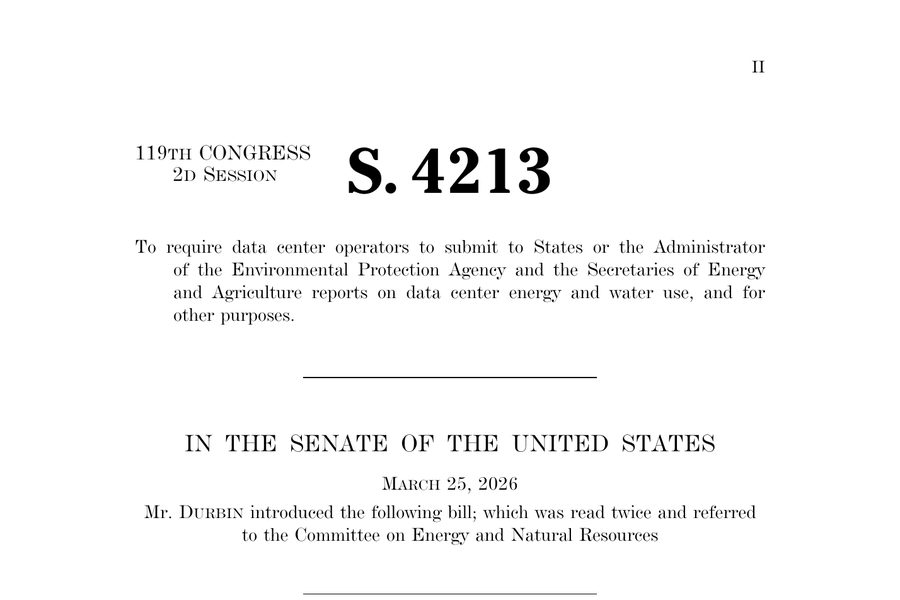
S. 4213, the Data Center Water and Energy Transparency Act, as introduced in the Senate on Mar 25, 2026
Try it
1Switch a source off.
2Watch the number and its range.
An illustrative example built on real documents: the data center message from the home page
Racine’s own figures, released after a records lawsuit: about 2.8 million gallons a year in phase one, up to 8.4 million later.
Wisconsin Public Radio, Sept 17, 2025
“Over 90% of our datacenter capacity uses this system, requiring water only once during construction.”
Microsoft, on its Mount Pleasant campus, Sept 18, 2025
AB 840 would have required a yearly water report to the DNR. It passed the Assembly 53 to 44 and died in the Senate on Mar 23, 2026.
Wisconsin Legislature, 2025-2026 session
Up to 7 million gallons a day of Lake Michigan water may go to Mount Pleasant, up to 2.7 million of it consumed.
Wisconsin DNR, 2018 diversion approval
“The new data center will report its Lake Michigan water use every quarter, checked by an outside auditor.”
Support for this sentence58%
Range 52% to 63%, 50 simulated residents
In Thinkwell, a simulated result comes with its range and the population it speaks for, rather than one number on its own.
Trust the number
Personas are fast. Verified people keep them honest.
BuiltSimulation-tested, not yet run on a live panel
Simulated audiences answer in minutes, but on their own nobody can say how far off they are. Thinkwell’s method pairs persona answers with a smaller sample of verified people and uses the verified answers to measure and correct the personas’ error, following peer-reviewed research.
The result comes with a margin of error that holds for the number of verified people you actually have, not only in theory for very large samples. That depends on three conditions: the verified people are drawn at random from the audience you want to describe, which of them answer is decided at random, and the persona predictions are fixed before the answers come in.
Up to 35%less sampling noise than verified people alone, in simulation, with no bias added when those conditions hold.
Designed for every result
A disclosure sheet
Identity tier
Who stands behind the number, from real ID to self-attested.
Sample
How many verified people, and how many personas, went into it.
Effective N
What the blended sample is worth, stated as a count of people.
How it was made
The method, its version, and the calibration curve behind it.
Controls and safeguards
A dedicated workspace for each client.Coming soon on Enterprise, with your team deciding what each client can see.
Roles and an audit log.Roles set who can do what in a workspace, and the audit log records who did it and when. Included on Enterprise, and an add-on for Pro.
Sources you can check.Research, briefings, and reports cite their sources, and a statement that fails its source check is flagged.
Nothing sends itself.A draft goes out when someone on your team sends it, and projects pause for a person’s approval along the way.
Remembers what matters.
Meet dynamic, objective-based scores.
The quality of a piece of work depends in part on what it was meant to accomplish. Thinkwell evaluates your work against the objectives you establish, keeping the reasoning behind each assessment available for review.
Measure the work.
Evaluate drafts, communications, and proposed actions before committing to them.
Maintain standards.
Give teams a shared basis for reviewing work and making decisions.
Adapt to context.
Consider the different audiences, objectives, and conditions surrounding a decision.
Learn from outcomes.
Connect what was planned and delivered with what actually happened.
Thinkwell For You
How a firm grows with Thinkwell.
Follow a hypothetical public affairs firm as it expands its use of Thinkwell, brings clients into the workstation, and builds knowledge that carries forward from one project to the next.
A story, not a customer: no firm or client here is real. Client seats and client workspaces, in the last three stops, are coming soon.
First, the firm.
1A public affairs firm signs up to test its messages.The firm plans to grow and to bring its clients into Thinkwell, so it starts on Enterprise with one public affairs team. That team tests each message on audience personas before it goes out and reads the result as a range.How it’s billedAn Enterprise subscription with a seat for each person, plus credits for its audience simulations.
2The same firm adds a business development team.To win new clients, the firm opens a business development team in its own workspace. The team uses the add-ons the firm already has and adds Business to the seats that need it.How it’s billedIndividual user seats for the new team, plus the seat-specific Business add-on on the seats that use it.
3The same firm adds a government relations team.To advise clients on legislation, the firm adds a government relations team and the Government add-on. The add-on is organization-wide, so every team can use it.How it’s billedSeats for the new team, plus the Government add-on, purchased once for the whole firm.
Then, its client.
4An airline client signs on with the firm.To keep the airline’s work apart from its other clients and share it on its own terms, the firm gives the airline a client seat: a dedicated workspace, audience personas for its audiences, campaigns in its name, and sharing with authorized client users, one item at a time.How it’s billedComing soon: one client seat, billed for each month the airline is an active client.
5The airline opens its own Thinkwell organization.To keep its work in one place, whichever firm it hires, the airline opens its own Thinkwell organization. The work the firm shared with it is copied in; the firm’s internal work stays with the firm.How it’s billedThe airline subscribes to its own plan. Coming soon: the firm’s client seat for the airline moves to the lowest tier.
6The airline adds a second firm.To bring in more expertise, the airline adds a second firm, and each firm works in a separate workspace with its own access. If the airline changes service providers, the departing firm’s users lose access and the work stays with the airline.How it’s billedAn Enterprise subscription for the airline, with seats for the people from each firm. Coming soon: a separate workspace for each firm.